Why Does Long-Term Betel Nut Chewing Increase the Risk of Oral Cancer? The Answer May Be More Serious Than You Think
Posted by DengYue Medicine
Filed in Health 102 views
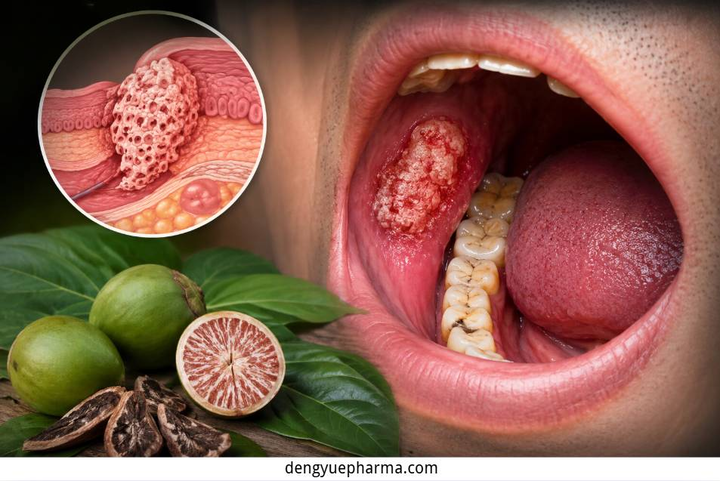
Why does long-term betel nut chewing increase the risk of oral cancer? This is a health concern for many people. Betel nut has a long history of use in several countries and regions across Asia, where it is commonly chewed as a stimulant or as part of social and cultural traditions. However, a growing body of epidemiological research and clinical evidence has shown that long-term betel nut chewing is closely associated with the development of oral cancer. Betel nut not only causes persistent irritation to the oral mucosa but may also increase the risk of oral cancer through multiple mechanisms, including exposure to carcinogenic compounds, chronic inflammation, and the development of precancerous lesions.
In recent years, oral cancer has become one of the most common malignancies of the head and neck worldwide, and long-term betel nut chewing is widely recognized as a major risk factor. As a platform dedicated to providing the latest information on innovative medicines, cancer treatment, and medical advances worldwide, Dengyue closely follows the latest research on oral cancer. Through accurate, science-based health information, Dengyue Pharma aims to raise public awareness of disease prevention. This article explains why long-term betel nut chewing increases the risk of oral cancer by exploring its carcinogenic mechanisms, risk factors, early symptoms, and preventive strategies.
Why Does Long-Term Betel Nut Chewing Increase the Risk of Oral Cancer?
Oral cancer caused by long-term betel nut chewing is not the result of a single factor. Instead, it develops through the combined effects of multiple risk factors.
1. Continuous Mechanical Irritation Damages the Oral Mucosa
Betel nuts are hard in texture and rich in coarse fibers. Repeated chewing continuously rubs against the oral mucosa, causing repeated injury to the inner cheeks, tongue margins, gums, and the floor of the mouth.
Under normal circumstances, the oral mucosa has the ability to repair itself. However, persistent irritation forces the tissue to undergo repeated cycles of damage and repair, increasing the likelihood of abnormal cell proliferation. Over time, some individuals may develop thickened oral mucosa, hyperkeratosis, leukoplakia, or erythroplakia, all of which are considered precancerous changes that may create favorable conditions for the development of oral cancer.
2. Chemical Components in Betel Nut Have Carcinogenic Effects
Betel nut contains several biologically active alkaloids, including arecoline and arecaidine. These compounds can undergo chemical reactions within the body to produce carcinogenic nitrosamines.
Research suggests that these substances may damage cellular DNA, increase the frequency of genetic mutations, and disrupt normal cell cycle regulation. When DNA damage accumulates beyond the body's repair capacity, the likelihood of malignant transformation increases significantly.
The International Agency for Research on Cancer (IARC) has classified areca nut and areca nut-containing products as carcinogenic to humans. Long-term betel nut chewing is therefore recognized as one of the major risk factors for oral cancer.
3. Chronic Inflammation Promotes Cancer Development
Long-term betel nut chewing keeps the oral cavity in a state of chronic inflammation.
During chronic inflammation, inflammatory cells continuously release cytokines and reactive oxygen species (ROS). Although these molecules play important roles in tissue repair, prolonged exposure can also damage healthy cells, promote DNA injury, and stimulate abnormal cell proliferation.
An increasing number of studies indicate that chronic inflammation contributes not only to the progression of oral cancer but also to the development of many other types of malignant tumors.
4. Increased Risk of Precancerous Lesions
Long-term betel nut chewing can also lead to several precancerous conditions, the most common of which is oral submucous fibrosis (OSF).
Patients may gradually experience stiffening of the oral mucosa, reduced tissue elasticity, difficulty opening the mouth, and problems with eating. Oral submucous fibrosis is considered a potentially malignant disorder with a relatively high risk of transformation into oral cancer. Continued exposure to betel nut significantly increases this risk.
In addition, oral leukoplakia and erythroplakia are also important precancerous lesions that require careful monitoring.
What Other Factors Increase the Risk of Oral Cancer?
In addition to long-term betel nut chewing, the following factors may further increase the risk of developing oral cancer:
● Long-term tobacco smoking
● Heavy alcohol consumption
● The combined use of betel nut, tobacco, and alcohol
● Poor oral hygiene
● Chronic irritation caused by ill-fitting dentures or sharp teeth
● Insufficient intake of fresh fruits and vegetables
● Infection with high-risk human papillomavirus (HPV)
Among these factors, the combination of betel nut chewing, smoking, and alcohol consumption is associated with a substantially higher risk of oral cancer than any single risk factor alone.
What Are the Early Symptoms of Oral Cancer?
Early-stage oral cancer often presents with subtle symptoms that can easily be overlooked. Individuals who chew betel nut regularly should pay close attention to the following warning signs:
● Mouth ulcers that do not heal within two weeks
● White or red patches inside the mouth
● Lumps or hardened areas in the oral cavity
● Progressive difficulty opening the mouth
● Pain while chewing, swallowing, or speaking
● Restricted tongue movement
● Unexplained loose teeth
● Swollen lymph nodes in the neck
If any of these symptoms persist, medical evaluation by a dentist, oral medicine specialist, or head and neck surgeon should be sought as soon as possible.
How Can You Reduce the Risk of Oral Cancer Caused by Long-Term Betel Nut Chewing?
Preventing oral cancer begins with reducing exposure to known risk factors, and quitting betel nut chewing is one of the most effective preventive measures.
The following recommendations can help protect oral health:
● Stop chewing betel nut as early as possible.
● Quit smoking and limit alcohol consumption.
● Maintain good oral hygiene and receive regular professional dental cleanings.
● Eat a balanced diet rich in fresh fruits, vegetables, vitamins, and dietary fiber.
● Schedule regular oral health examinations.
● Individuals with oral leukoplakia, erythroplakia, or oral submucous fibrosis should undergo regular follow-up evaluations as recommended by healthcare professionals.
Even if no obvious symptoms are present, people with a long history of betel nut chewing are advised to undergo at least one comprehensive oral examination each year. Early detection of precancerous lesions can greatly improve treatment outcomes.
Conclusion
Why does long-term betel nut chewing increase the risk of oral cancer? Extensive scientific evidence shows that betel nut contributes to oral cancer development through multiple mechanisms, including continuous mechanical irritation, chemical carcinogenesis, chronic inflammation, and the formation of precancerous lesions. Smoking, excessive alcohol consumption, and other risk factors may further increase the likelihood of developing the disease.
Oral cancer is a preventable disease that can often be detected at an early stage. Quitting betel nut chewing, maintaining a healthy lifestyle, receiving regular oral examinations, and seeking prompt medical attention for abnormal oral lesions are all essential steps in reducing the risk of oral cancer. For individuals who have chewed betel nut for many years, giving up this habit as early as possible can significantly improve oral health and lower the risk of developing oral cancer in the future.
Dengyue Pharma—Committed to Protecting Your Health.