Best Applications for Polished Plaster Finish in Commercial Spaces
Posted by Smartcrete Decorative Solutions
Filed in Other 32 views
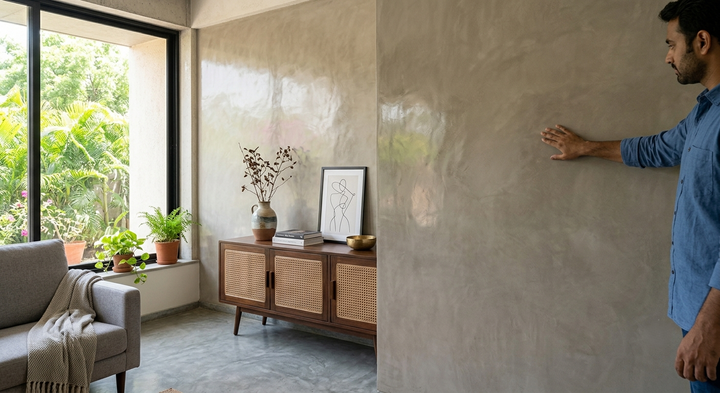
Commercial interiors require more than functional surfaces. Businesses also desire locations that are visually appealing, inviting, and memorable. This is why decorative wall coatings have become an essential component of contemporary business design. A polished plaster finish can provide depth, texture, and a refined appearance to rooms while providing a unique alternative to traditional paint or wall coverings.
Polished plaster is often made by adding numerous layers of plaster and meticulously burnishing the surface to obtain varying degrees of gloss and texture. Depending on the material and process, the finished look can range from soft and matte to highly polished and marble-like.
Why Use Polished Plaster for Commercial Interiors?
One of the most appealing features of polished plaster is its perceived depth. Instead of providing a smooth, uniform surface, it can generate subtle differences that shift in response to the ambient light. This makes it especially suitable in places where the walls are meant to add to the overall interior design.
It can also be customized with various colors, textures, and shine levels. This versatility enables designers to develop finishes that complement furniture, lighting, flooring, natural stone, wood, metal, and other interior elements.
Because polished plaster is a skillful, hand-applied finish, the final appearance might be unique rather than homogeneous.
Hotel Lobby and Reception Areas
The reception room is frequently the first interior space that guests encounter. A well-chosen polished plaster finish can serve as an appealing backdrop for reception desks, entry walls, columns, or focal areas.
Soft neutral tones can produce a relaxing and elegant atmosphere, but darker or more dramatic finishes can make a more powerful visual statement. The finish is particularly suitable for decorative lighting since changes in light can highlight its texture and depth.
Hotels have employed polished plaster in their welcome areas, feature walls, bars, restrooms, and other ornamental purposes.
Restaurants and Cafés
Restaurants and cafés frequently employ interior design to set a specific ambiance. Polished plaster is suitable for contemporary, minimalist, Mediterranean, luxury, and industrial-inspired designs.
It can be utilized behind a counter, in a dining area, on accent walls, or as a backdrop for decorative lighting and artwork. The seamless appearance can also contribute to a visually clean space, as it eliminates the recurring joints found in tiled walls.
For regions that are exposed to food, dampness, or regular cleaning, the finish and protective coating should be environmentally friendly.
Retail Stores and Showrooms
Retail rooms require backgrounds that allow the products to be the focal point. A subtle polished plaster wall can add texture without overwhelming exhibits.
Fashion boutiques, furniture stores, jewelry shops, cosmetic stores, and luxury showrooms can employ a variety of colors and finishes to match their brand-inspired interior designs.
A well-chosen surface can also help products and display lighting stand out. For example, a soft neutral finish can create an elegant background, whilst a darker surface can generate contrast around lighted displays.
Office Reception Areas
Modern offices are more concerned with the appearance of their reception and guest spaces. A polished plaster feature wall may make a workplace appear more elegant and professional.
It can be used with wood, glass, metal, stone, or minimalist furniture to create a harmonious environment. Instead of covering every wall, businesses might utilize polished plaster sparingly on the reception area or other significant architectural elements.
Luxury Spas and Wellness Centers
Wellness areas frequently feature natural-looking materials, gentle lighting, and soothing colors. Polished plaster, with its smooth surfaces and delicate tones, can compliment this technique.
It can be utilized in welcome areas, treatment rooms, feature walls, and some bathroom or wet-area applications if the proper system and protective treatment are specified. Some polished plaster systems are intended for damp locations, although appropriateness is dependent on the specific product, substrate, sealing, and installation process.
Hotel Bars and Lounges
Bars and lounges are good places for decorative finishes since lighting is so crucial. Polished plaster can be used to create a visually appealing backdrop behind a bar counter or along feature walls.
Gloss, satin, and matte finishes can create distinct atmospheres. Under artificial lighting, variances in the finish become more visible, adding visual dimension to the area.
Gallery and Creative Spaces
Art galleries and creative studios frequently require wall coverings that complement rather than compete with artwork. A correctly chosen polished plaster finish can serve as a subtle backdrop for paintings, sculptures, installations, and decorative objects.
Neutral finishes can let artwork stand out, yet textured or darker surfaces might create a more dramatic visual environment.
Feature Walls and Architectural Details
Polished plaster does not need to cover the entire commercial interior. It can be applied judiciously to feature walls, columns, curved surfaces, niches, ceilings, and other architectural aspects.
This allows you to introduce a quality material without using it throughout the entire space. It can also assist call attention to specific areas, such as reception desks, staircases, entrances, and display areas.
Choosing the Right Finish
Before deciding on a polished plaster system, organizations should examine the space's purpose, expected traffic, cleaning requirements, moisture exposure, lighting, and desired appearance.
Color is also significant. Warm beige, cream, and earthy tones can create a softer environment, whilst gray, charcoal, or deeper shades can provide a more modern look. The appropriate shine level should be discussed with the applicator.
Professional surface preparation is required since flaws in the substrate can impair the final effect. The application itself needs skill, as the technique and number of layers affect the final effect.
Conclusion
A polished plaster finish is a versatile ornamental option for commercial areas ranging from hotel lobbies and restaurants to retail stores, offices, spas, galleries, and showrooms. Its ability to generate depth, texture, color variation, and various sheen levels provides designers with a wide range of creative options.
The best results are obtained by selecting the appropriate system for the purpose, adequately preparing the surface, and performing competent installation. When these variables are taken into account, polished plaster can become a standout feature in a commercial space, adding character and sophistication.