How to Select Commercial Cookery Equipment for High-Volume Catering Businesses
Posted by Al Khaleej Kitchen
Filed in Other 0 views
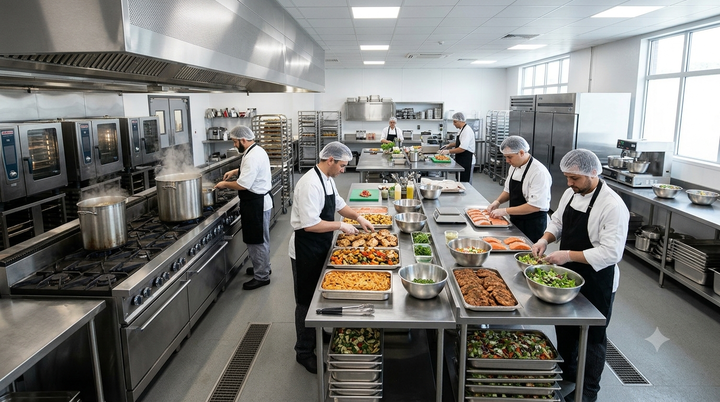
Running a high-volume catering business requires careful planning, efficient kitchen operations, and reliable equipment. Whether preparing meals for corporate events, weddings, hotels, schools, or large gatherings, catering teams must produce food quickly without compromising taste, quality, or hygiene.
Choosing the right commercial cookery equipment is an important step towards achieving these goals. The right equipment helps kitchen staff manage large orders, maintain consistent cooking results, reduce preparation time, and handle busy service schedules more effectively.
In this blog, we will explore the key factors catering businesses should consider when selecting commercial cooking equipment for their daily operations.
1. Understand Your Catering Business Requirements
Before purchasing any equipment, understand the type of catering services your business provides. A company preparing meals for daily corporate lunches may have different requirements from a catering service handling large weddings and outdoor events.
Start by estimating the number of meals you prepare during normal operations and peak periods. Consider your menu, cooking methods, portion sizes, and preparation schedules.
For example, a business serving Indian cuisine may need commercial cooking ranges, large-capacity rice cookers, chapati-making machines, and suitable food preparation equipment. A catering company specialising in baked goods may require commercial ovens, mixers, and temperature-controlled storage.
Understanding these requirements helps you invest in equipment that supports your actual workload instead of purchasing unnecessary appliances.
2. Choose Equipment with the Right Production Capacity
Production capacity is one of the most important considerations for high-volume catering businesses. Equipment that works well for a small restaurant may not be suitable for preparing hundreds or thousands of meals.
Look for commercial cooking appliances designed to handle your expected production volume. Depending on your menu, essential equipment may include:
-
Commercial cooking ranges: Useful for preparing multiple dishes simultaneously.
-
Large-capacity ovens: Suitable for roasting, baking, and cooking large batches.
-
Commercial fryers: Helpful for preparing fried foods in larger quantities.
-
Rice cookers and steamers: Useful for preparing rice, vegetables, and other steamed dishes.
-
Chapati-making machines: Suitable for catering businesses that regularly prepare large quantities of chapatis.
-
Commercial food preparation equipment: Helps speed up repetitive preparation tasks.
Always check the manufacturer's stated capacity and operating requirements. Choosing equipment with sufficient capacity helps prevent delays during peak service hours.
3. Consider Energy Efficiency and Operating Costs
Commercial cooking equipment can consume considerable electricity or gas, particularly when used for extended periods. Therefore, energy efficiency should be an important part of your purchasing decision.
Compare equipment based on energy consumption, cooking performance, expected usage hours, and maintenance requirements. Appliances with suitable temperature controls and efficient heat distribution can help reduce unnecessary energy use.
Gas and electric equipment both have advantages, depending on the kitchen setup, menu, and local utility costs. Before choosing, evaluate the availability of suitable connections, installation requirements, and applicable safety standards.
Remember that the lowest purchase price does not always mean the lowest overall cost. An efficient, durable appliance may provide better long-term value through reduced operating expenses and fewer interruptions.
4. Prioritise Durability and Food Safety
Catering kitchens often operate under demanding conditions. Equipment may be used continuously during preparation, cooking, and service, making durability essential.
Choose appliances made from suitable commercial-grade materials and designed for frequent use. Stainless steel is commonly used for worktables, preparation surfaces, and other kitchen equipment because it is durable and relatively easy to clean when maintained properly.
Food safety should also influence equipment selection. Look for designs that allow convenient cleaning, safe food handling, and appropriate temperature control.
Ensure that the kitchen layout supports separation between raw ingredients, cooked food, and clean utensils. Follow applicable food safety requirements and maintain regular cleaning and equipment inspection schedules.
5. Evaluate Space and Kitchen Layout
High-volume catering operations need an organised kitchen where employees can work efficiently without unnecessary movement or congestion.
Before buying equipment, measure the available kitchen space and plan where each appliance will be installed. Consider preparation areas, cooking stations, washing facilities, storage spaces, and food dispatch points.
Equipment should fit comfortably within the available space while allowing safe access for employees, cleaning, and maintenance. Proper ventilation, drainage, electrical connections, and gas connections must also be considered where applicable.
If your business prepares food at different locations, portable or modular equipment may be useful, provided it meets the relevant operational and safety requirements.
6. Check Maintenance and After-Sales Support
Even high-quality equipment requires regular maintenance. Unexpected breakdowns can delay food preparation, affect service schedules, and increase operating costs.
Before purchasing, ask about warranty coverage, spare parts availability, technical support, and servicing arrangements. Check whether the supplier provides installation assistance and operating instructions.
It is also useful to train kitchen staff in the correct use and daily cleaning of each appliance. Routine inspections can help identify minor problems before they lead to costly repairs.
Working with a dependable supplier makes it easier to maintain equipment performance throughout its service life.
7. Balance Your Budget with Long-Term Value
Budget planning involves more than comparing the prices of different appliances. Consider installation, energy consumption, cleaning supplies, maintenance, replacement parts, and expected equipment lifespan.
Create a list of essential equipment and prioritise items that directly affect your menu and production capacity. Compare multiple models and request demonstrations where possible.
When evaluating commercial cookery equipment, focus on reliability, usability, capacity, and total ownership cost. This approach helps catering businesses make practical investments without placing unnecessary pressure on their budgets.
Conclusion
Selecting the right commercial cookery equipment is essential for catering businesses that prepare food in large quantities. From production capacity and energy efficiency to hygiene, kitchen layout, and maintenance, every factor contributes to smooth daily operations.
By understanding your business requirements and comparing equipment carefully, you can build a kitchen that supports consistent food quality, efficient preparation, and reliable service.
Al Khaleej Kitchen can be considered when exploring commercial kitchen equipment solutions for catering businesses, restaurants, and hotels. Investing in suitable equipment helps create a more organised kitchen and prepares your business to manage growing customer demand with confidence.