Common Errors in DNA RNA Extraction and How a Microcentrifuge Helps Avoid Them
Posted by Southwest Science
Filed in Card Games 6 views
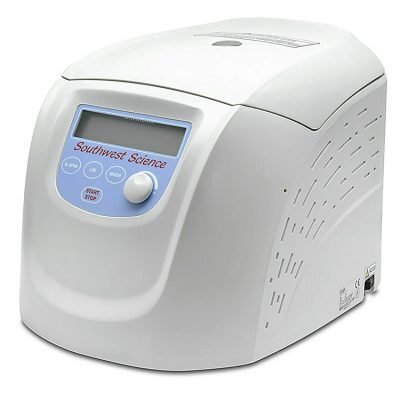
DNA and RNA extraction is one of those lab processes where everything looks simple on paper, but small mistakes can easily affect the final result. Even experienced lab users sometimes run into issues that lead to low yield, contamination, or poor-quality nucleic acids. The good part is that many of these errors are preventable when the process is supported by the right equipment and careful handling.
A key tool that quietly plays a big role here is the microcentrifuge. It may look like a simple bench device, but in DNA and RNA workflows, it directly impacts purity, separation, and consistency.
This blog will highlight some common errors and how a microcentrifuge helps reduce them.
1. Incomplete Phase Separation
One of the most frequent issues during extraction is poor separation between phases after lysis and centrifugation. If the aqueous and organic layers are not properly separated, contaminants can carry over into the final sample.
This usually happens when:
● Centrifugation speed is too low
● Spin time is inconsistent
● Tubes are not balanced properly
A properly used microcentrifuge for DNA RNA extraction helps generate the required centrifugal force to clearly separate phases. This improves clarity in the aqueous layer, which is where DNA or RNA is collected.
2. Sample Loss During Transfer
Another common error is losing material while transferring samples between tubes. This often happens when pellets are not well formed or supernatant is not clearly separated.
A stable microcentrifuge helps here by:
● Forming tight and visible pellets
● Reducing mixing between layers
● Allowing cleaner pipetting steps
When pellets are compact, there is less chance of disturbing them during handling, which improves overall yield.
3. RNA Degradation Due to Delay
RNA is especially sensitive and can degrade quickly if the workflow is slow or inconsistent. Even short delays between steps can reduce quality.
This is where timing control becomes important. A microcentrifuge for DNA RNA extraction allows quick spin cycles, so samples move efficiently from one step to another. Faster processing reduces exposure time and helps preserve RNA integrity.
4. Cross-Contamination Between Samples
Cross-contamination is a serious concern in molecular biology workflows. It can occur due to splashing, improper sealing, or unbalanced spinning.
A microcentrifuge reduces this risk by:
● Keeping tubes tightly secured during spins
● Ensuring stable rotation without vibration
● Supporting balanced loading for all samples
When the rotor is balanced correctly, there is less mechanical disturbance, which lowers the risk of accidental mixing between samples.
5. Inconsistent Results Across Replicates
Sometimes, two identical samples give different results. This usually comes from inconsistent centrifugation conditions such as varying speeds or uneven timing.
A good microcentrifuge improves reproducibility by maintaining:
● Fixed speed settings
● Consistent spin duration
● Uniform centrifugal force across samples
This consistency is especially important in research settings where repeatability matters as much as accuracy.
6. Pellet Disturbance During Supernatant Removal
Removing supernatant without disturbing the pellet is a delicate step. If the pellet is loose or poorly formed, it can easily get disrupted, leading to loss of nucleic acid.
A microcentrifuge helps form compact pellets, making it easier to carefully remove liquid without disturbing the settled material. This small improvement can make a big difference in final concentration and purity.
7. Poor Yield Due to Low Spin Efficiency
Sometimes, the issue is simply inefficient centrifugation. If the force is not strong enough or the spin is uneven, nucleic acids may not fully separate or bind properly during extraction steps.
Using a properly calibrated microcentrifuge ensures efficient sedimentation and improves overall yield without increasing processing complexity.
Final Verdict:
DNA and RNA extraction depends heavily on precision, timing, and consistency. Many common errors come not from complex procedures but from small mechanical or handling issues during centrifugation. A microcentrifuge for molecular biology helps reduce these risks by improving separation quality, maintaining consistency, and supporting cleaner workflows from start to finish.