Egg Donation Canada: How the Process Works for Donors and Intended Parents
Posted by citigebhiringview citigebhiringview
Filed in Other 4 views
Egg donation in Canada brings together two sides of one hopeful story: a donor who chooses to help, and intended parents who need donor eggs to build their family. Whether you are a single parent, a couple facing infertility or a 2SLGBTQ+ family, understanding how egg donation works from both perspectives can make the journey feel far less mysterious. This guide explains the legal framework, each stage of the process, the main costs and the differences between known and anonymous donation.
Quick Answer
Egg donation in Canada is legal, but buying eggs is not. Donors give eggs altruistically and may only be reimbursed for receipted expenses related to the donation. The process usually involves applying, building a profile, matching, medical and psychological screening, a legal contract, cycle syncing, about 8 to 12 days of hormone injections, monitoring and a short retrieval procedure. Her Helping Habit estimates a fresh egg donation cycle in Canada costs intended parents $25,000 to $45,000, depending on the situation.
What Is Egg Donation?
Egg donation is a fertility treatment in which a donor provides her eggs so that another person or couple can try to conceive through IVF. The donated eggs are fertilized with sperm in a lab, and the resulting embryo is transferred to the intended mother or to a surrogate.
People turn to an egg donor in Canada for many reasons, including diminished ovarian reserve, premature ovarian insufficiency, a genetic condition they do not want to pass on, previous unsuccessful IVF cycles, or because they are single men or male couples building a family with a surrogate.
Is Egg Donation Legal in Canada?
Yes, egg donation is legal in Canada, within the rules of the federal Assisted Human Reproduction Act (AHRA) and the Reimbursement Related to Assisted Human Reproduction Regulations, in force since June 2020. The key points are:
-
It is illegal to purchase eggs from a donor, or to offer to do so.
-
Donors may be reimbursed for receipted, out-of-pocket expenses directly related to the donation, such as travel, medications, counselling, legal services, care of dependants and telecommunications.
-
Every reimbursement needs a receipt and a signed, dated declaration, and records are kept for six years.
Because of these rules, egg donation in Canada is altruistic. Donors are motivated by a wish to help, and intended parents cover legitimate costs rather than paying for eggs.
Known vs Anonymous Egg Donation
Known egg donation is an arrangement where the donor and intended parents know each other’s identities and can agree on some level of ongoing contact. Anonymous donation keeps identities private.
Known donation has grown in popularity because it allows donor-conceived children to learn about their genetic origins and gives families a way to share health information over time. At Her Helping Habit, which describes itself as Canada’s premier known egg donor agency and says it was the first egg donation agency in Canada to offer strictly known donation services, donors choose their preferred level of contact. This can include in-person meetings, phone calls or yearly updates. Donors are also asked to be open to contact with donor-conceived offspring once they turn 18, and health information can be shared both ways as time goes on.
The Egg Donation Process Step by Step
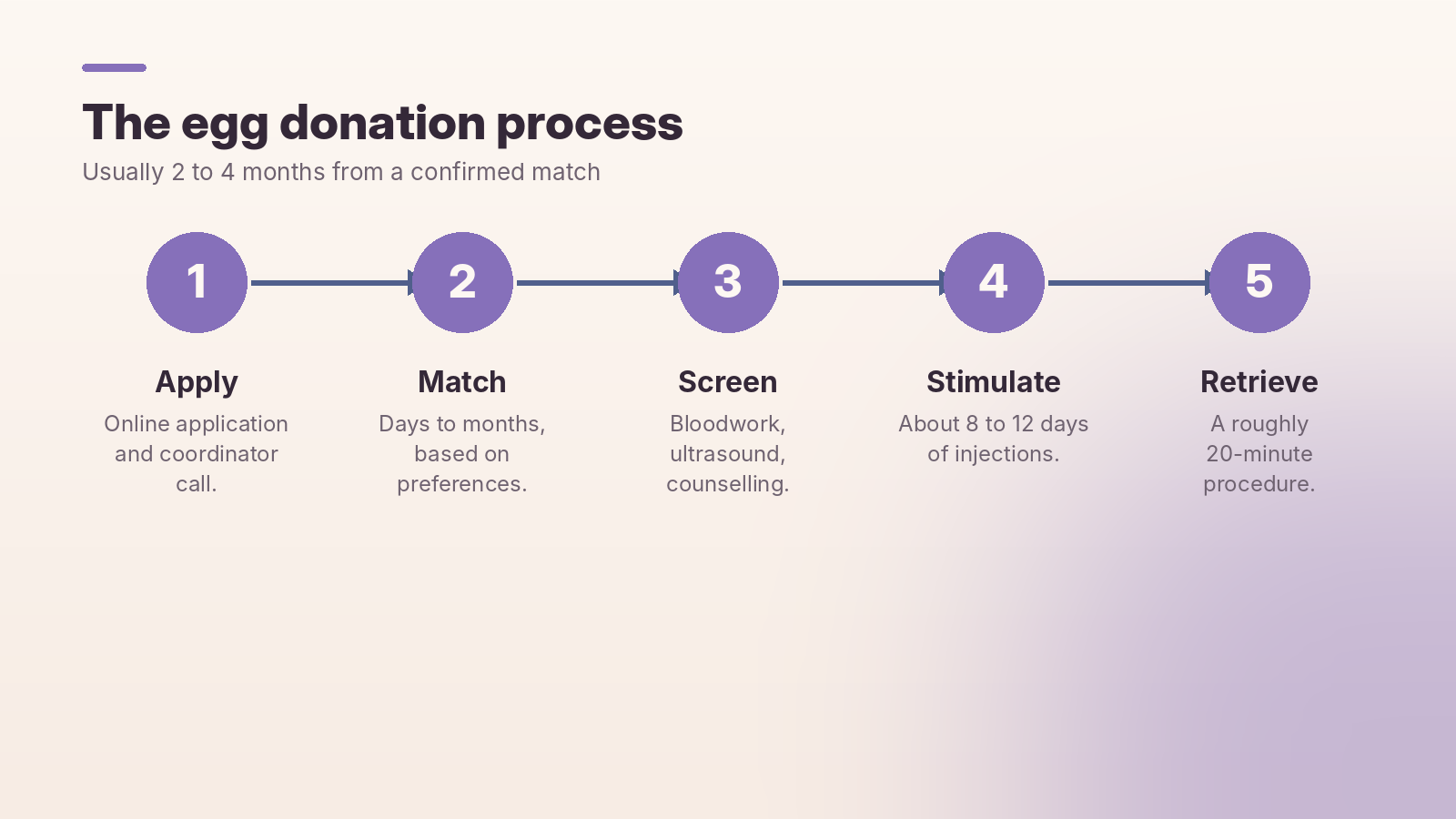
Here is how egg donation in Canada typically unfolds, based on the process Her Helping Habit describes. Timelines vary, and every clinic has its own protocols.
-
Application. The donor completes an online application, receives an information packet and has a video call with a coordinator.
-
Profile. The donor builds a detailed profile that intended parents can review.
-
Matching. Intended parents select a donor. Matching can take anywhere from a few days to several months.
-
Preliminary testing. Medical and psychological screening begins. This stage can take three to six months after a match.
-
Legal contract. The donor and intended parents meet with lawyers and sign an agreement.
-
Cycle syncing. The donor’s cycle is aligned with the clinic’s schedule, often using birth control pills.
-
Hormone injections. The donor takes injections for about 8 to 12 days, using a short needle.
-
Monitoring. She attends roughly three to five monitoring appointments for bloodwork and ultrasounds.
-
Retrieval. The egg retrieval itself is about a 20-minute procedure, followed by one to four days of recovery.
Syncing and donation usually happen two to four months after a match is confirmed.
What Donors Should Know
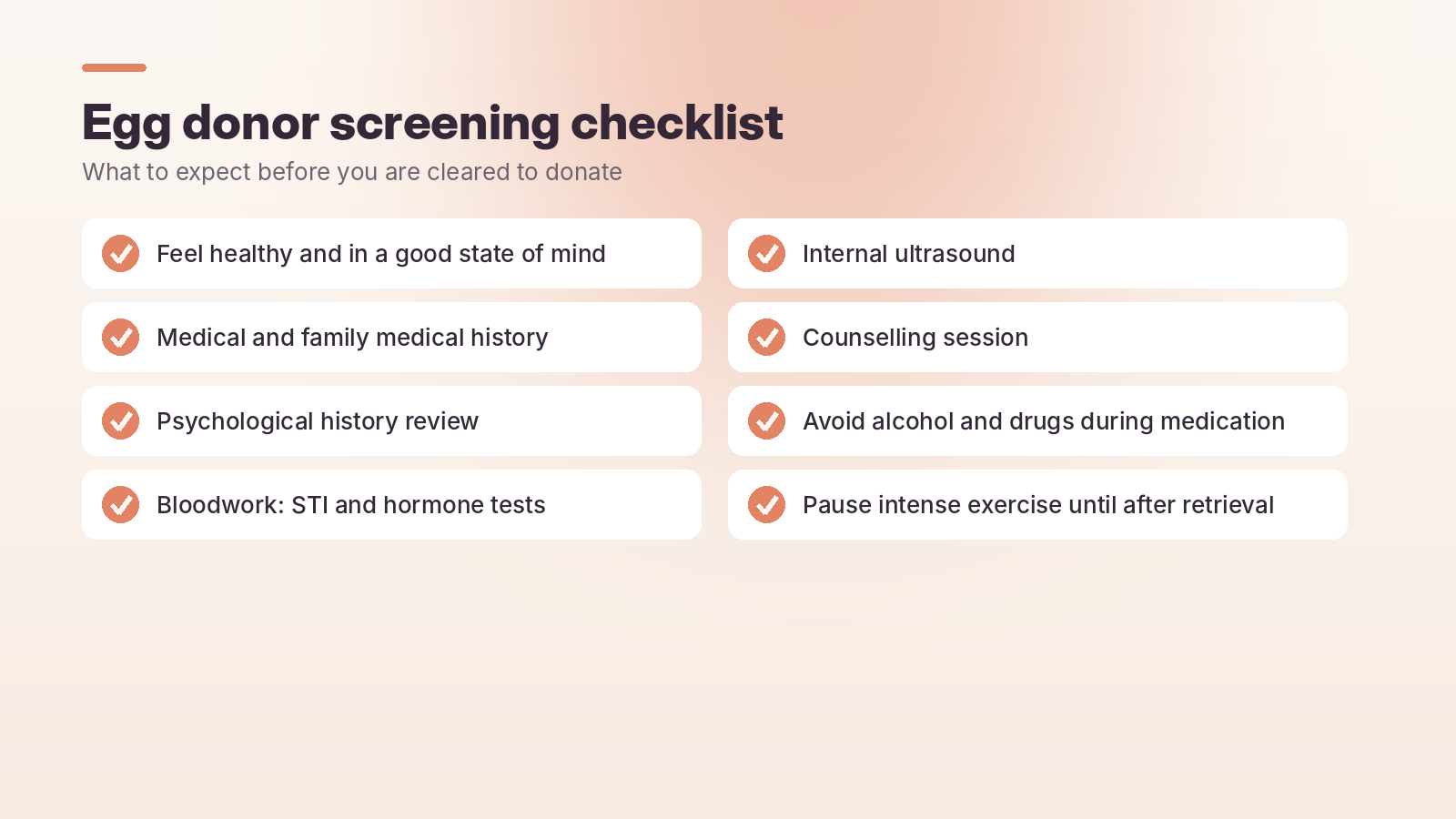
For donors, it helps to know what is expected before applying. Screening typically includes a review of medical and family medical history, psychological history, bloodwork for STIs and hormones, an internal ultrasound and a counselling session. Donors also receive genetic and hormone testing at no cost to them.
During the medication phase, contracts often ask donors to avoid intercourse, intense exercise, alcohol and drugs. The main medical risk is ovarian hyperstimulation syndrome (OHSS), which careful monitoring helps reduce. The American Society for Reproductive Medicine (ASRM) recommends that a donor give no more than six times.
If a donor lives out of town, the intended parents cover travel, lodging and food. She also needs a companion for 24 hours after retrieval. Her Helping Habit lists more detailed egg donor requirements in Canada on its site, and donors should review them with their own doctor before applying.
What Intended Parents Should Know
For intended parents, the process starts with finding the right donor. Her Helping Habit offers an egg donor database where recipients log in to browse profiles. The database only shows recipients donors whose stated preferences, such as willingness to travel, match their situation, which helps avoid disappointment later.
Intended parents are responsible for most costs. Her Helping Habit estimates the following, noting that figures vary by situation:
|
Cost item |
Her Helping Habit estimate |
|---|---|
|
Egg donor expense reimbursement |
$4,000 to $7,000 |
|
Fertility medications (paid by intended parents) |
$3,000 to $5,000 |
|
Fresh egg donation cycle in Canada (total) |
$25,000 to $45,000 |
Donor reimbursement can include lost wages, child or pet care, phone, supplements, travel and food, always supported by receipts and declarations. You should also plan for clinic fees, legal fees and counselling.
Choosing Support for Your Egg Donation Journey
Egg donation involves medical, legal and emotional decisions, so many families and donors appreciate guidance. Her Helping Habit supports both sides of known egg donation in Canada and also offers an egg donation in Mexico option, embryo donation, surrogacy, consulting and counselling. It hosts an egg donor webinar for people who want to learn more before applying.
Getting started involves a free 30-minute consult with a coordinator, a personal questionnaire where you choose your programs, and then working toward your goal. If known donation appeals to you, you can explore known egg donation Canada programs with Her Helping Habit and see whether it fits your family or your wish to help.
Please also seek independent legal advice from a fertility lawyer and medical guidance from your fertility clinic. Parentage rules vary by province, and a lawyer is essential for your donor agreement.
Frequently Asked Questions
Can you pay an egg donor in Canada? No. It is illegal to purchase eggs in Canada. Donors can only be reimbursed for receipted expenses directly related to the donation, supported by a signed, dated declaration.
How long does egg donation take in Canada? It varies. Matching can take days to months, preliminary testing can take three to six months, and syncing and donation usually happen two to four months after a match is confirmed.
Is egg retrieval painful? Retrieval is about a 20-minute procedure, and most donors recover within one to four days. Your fertility clinic will explain sedation, comfort measures and aftercare specific to you.
What is the difference between a known and an anonymous egg donor in Canada? With a known donor, identities are shared and both sides agree on a level of contact. With anonymous donation, identities stay private, which limits future contact and information sharing.
How much does egg donation cost in Canada? Her Helping Habit estimates a fresh egg donation cycle costs $25,000 to $45,000, including donor reimbursement of about $4,000 to $7,000 and medications of about $3,000 to $5,000. Costs vary by situation.
Final Thoughts
Egg donation in Canada is a carefully regulated, deeply human process. For donors, it is a chance to help someone build a family, with screening, support and reimbursement for real expenses. For intended parents, it opens a path to parenthood that might otherwise feel out of reach. By understanding the law, each step of the process and the value of known donation, both donors and recipients can move forward with confidence and care.