Differences Between Open-Type and Closed-Type Fin Press
Posted by Zhenyu Yao
Filed in Technology 1 view
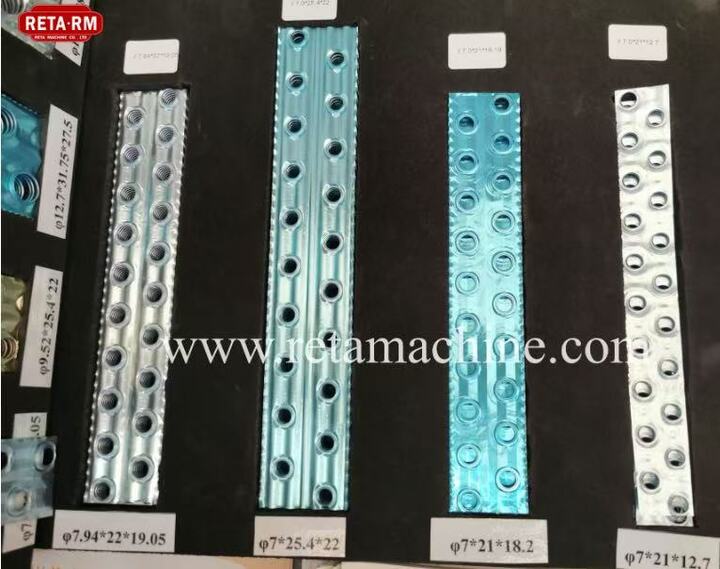
Fin presses are core equipment for manufacturing heat exchanger fins widely used in air conditioning, refrigeration and cooling industries. According to frame structure, they are mainly divided into open-type (C-frame) and closed-type (straight-side frame) fin presses, and their differences directly affect production accuracy, efficiency and application scenarios.
The most fundamental distinction lies in frame design. The open-type fin press adopts a C-shaped frame, with three sides open. Operators can easily access the die area, which brings great convenience for die installation, adjustment, inspection and maintenance. Its structure is relatively simple, with lower manufacturing cost and smaller footprint. However, the C-frame structure has an inherent weakness: under stamping load, the frame will produce certain elastic deflection. This deflection changes the clearance between upper and lower dies, reducing fin forming consistency and accelerating die wear. Therefore, open-type fin presses are generally used for small and medium tonnage, small-to-medium batch production, and workshops with frequent die changes and diversified fin specifications.
In contrast, the closed-type fin press uses a closed portal frame structure with closed load-bearing paths on both sides. The overall rigidity is much higher, and frame deflection under rated tonnage is controlled at an extremely low level. Stable die clearance guarantees high dimensional accuracy and uniform fin louver forming quality, which is critical for high-performance heat exchangers. Closed fin presses support higher stamping speed and continuous long-time running, suitable for large-size wide dies and mass production. Its disadvantage is limited access space; operators can only approach the worktable from the front, so die replacement and debugging take more time. Meanwhile, the machine price and foundation requirement are higher.
In terms of production selection, open fin presses are preferred for flexible, multi-variety orders, such as customized evaporator and condenser fins for small refrigeration manufacturers. Closed fin presses are the first choice for large factories pursuing stable high output and high precision, like mass production of standard air conditioner fins.
To sum up, there is no absolute superior type. The open-type highlights flexibility and cost advantage, while the closed-type focuses on rigidity, precision and continuous high-speed capacity. Choosing the right fin press depends on tonnage demand, batch volume, product tolerance and production scheduling plan.